
Fast facts on EU yacht VAT for buyers:
Value Added Tax is a consumption tax charged on goods and services across the European Union, and a yacht delivered or first used in EU waters is no exception. The single most useful thing to understand, working through a yacht vat eu buyers guide for the first time, is that VAT is not mainly about where you sign the contract — it is generally about where the vessel is delivered and first put into use. That is the trigger most EU tax authorities apply, and it is why the same OceanWalker S60 can sit in a different VAT position depending on whether delivery happens in France, Malta, or another EU country entirely.
For buyers used to a single national sales tax, EU VAT can feel unfamiliar, and that unfamiliarity is exactly what stalls otherwise-ready buyers at the final stage of a purchase. It does not need to be. A clear yacht VAT EU buyers guide, read alongside real advice from a qualified advisor, turns an intimidating topic into a short list of decisions: where to take delivery, and whether the boat will carry VAT-paid status or travel under temporary admission. Treat this page as a starting point, not a substitute for advice tailored to your own purchase.
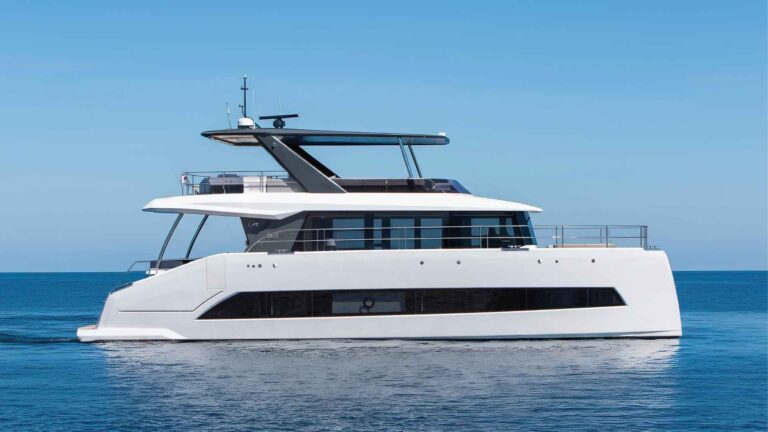
Standard VAT rates are set by each EU member state individually, not centrally by Brussels, so the rate that applies depends on which country the boat is delivered into. Across the eight countries where European Yacht Brokers arranges delivery, rates currently run roughly as follows — treat every figure as approximate and confirm it with the agency or your advisor, since rates do change.
| Country | Approximate standard VAT rate |
|---|---|
| Malta | ~18% |
| Cyprus | ~19% |
| France | ~20% |
| Spain | ~21% |
| Italy | ~22% |
| Portugal | ~23% |
| Greece | ~24% |
| Croatia | ~25% |
These are the standard rates that would typically apply to a new yacht purchase; reduced rates generally don’t apply. Rates change over time, so use this table as a general orientation within this yacht vat eu buyers guide, not as the final word for your specific purchase.
Once VAT has genuinely been paid on a yacht in one EU member state, that boat is generally considered to have "VAT-paid" status for the purposes of moving and reselling it freely within the EU, provided the paperwork proving payment travels with the vessel. This is one of the most practically important ideas in any yacht vat eu buyers guide, because it directly affects resale value: a boat with clean, provable VAT-paid status is straightforward to sell on to another EU-based buyer, while a boat with unclear or unproven VAT status is a harder, slower sale and can put off cautious buyers entirely.
In practice this means keeping the original VAT invoice, the builder’s or seller’s documentation, and any customs paperwork accessible for as long as you own the boat, not just at the point of purchase. If a boat has changed hands, changed flags, or spent time outside the EU, proving continuous VAT-paid status can take extra work, worth raising with a qualified advisor before a sale is agreed. Buyers new to any yacht vat eu buyers guide often underestimate how much resale value rides on this paperwork.
Non-EU-flagged yachts, and vessels owned by people resident outside the EU, can generally cruise EU waters for a period without triggering EU VAT, under a customs mechanism known as temporary admission. Current EU rules allow this for up to 18 months from first arrival in EU waters, after which the boat normally has to leave the EU customs territory (or VAT and duty become due) before a fresh period can begin. This is a genuinely useful option for a non-EU owner who wants to spend a season or two in the Mediterranean without committing to EU VAT registration, and it is one of the first mechanisms any thorough yacht vat eu buyers guide should explain clearly.
Temporary admission is real and commonly used, but it carries conditions on ownership, use and documentation beyond what a general guide can summarise for every situation. Confirm the current rules for your flag, residency and cruising plan with a customs broker before arriving in EU waters.
Since Brexit, UK-owned and UK-flagged yachts are treated as non-EU for VAT and customs purposes, the same as US-owned vessels, so temporary admission is often the relevant route for a UK buyer cruising the Mediterranean rather than basing a boat in the EU long-term. For a US or UK buyer purchasing an OceanWalker S60, the practical questions are usually the same: will the boat be EU VAT-paid or brought in under temporary admission, where will it be delivered and flagged, and how does that affect future resale.
These are exactly the questions a good yacht vat eu buyers guide should raise early rather than late, because the answer shapes delivery location, paperwork and timeline. European Yacht Brokers works with non-EU buyers regularly and walks through the practical options, while leaving the formal determination of VAT and customs status to the qualified professionals licensed to make that call — the same discipline any honest yacht vat eu buyers guide should follow.
Because European Yacht Brokers arranges delivery to any of eight marina countries — France, Italy, Spain, Portugal, Croatia, Greece, Cyprus and Malta — buyers genuinely do have a choice of delivery country, and since VAT is generally triggered by delivery and first use, that choice can have a real effect on the VAT position of the purchase. This is precisely the kind of decision that deserves early, honest input from both the agency and a qualified tax advisor, rather than a buyer working it out alone from general reading or a generic yacht vat eu buyers guide.
We are not offering specific tax-optimisation advice here — that would be irresponsible for a purchase of this size, and it is not what European Yacht Brokers is licensed to do. What we will say plainly is that delivery country is a decision worth making deliberately, early in the buying process rather than as an afterthought at handover. Involve the agency and your advisor together before a delivery country is fixed — exactly why a genuinely useful yacht vat eu buyers guide points you toward professionals rather than a single "best" answer.
European Yacht Brokers prepares registration and VAT documentation ahead of delivery for every OceanWalker sale, coordinating with the shipyard, the flag registry and the delivery marina. What the agency does not do is act as your tax advisor: for anything touching personal VAT liability, residency status, or cross-border structuring, we introduce buyers to qualified, independent tax advisors and customs brokers, and coordinate with them on the buyer’s behalf.
That combination — hands-on documentation support plus a direct line to the right independent professional — is what a genuinely useful yacht vat eu buyers guide should point you toward. If an OceanWalker S60 purchase is on hold over the VAT question, that is the conversation to start now, before a delivery date is fixed.
Continue exploring: the OceanWalker S60 in full, or find your European Yacht Brokers contact to start the conversation this yacht vat eu buyers guide has walked through. See also What Is a Power Catamaran? and the Cannes Yachting Festival guide, or head back to the guides hub.
For readers who want the rules directly from the source, two official EU resources are worth reading: the European Commission’s VAT rules and rates overview, which lists the current standard VAT rate for every member state, and the European Commission Taxation and Customs Union’s official FAQ on the rules for private boats, which covers temporary admission in detail. Neither replaces advice from a qualified advisor, but both are useful starting points for anyone working through a yacht vat eu buyers guide before a first EU purchase.
Generally no. If a yacht already has proven VAT-paid status from a purchase or delivery in one EU member state, and the supporting paperwork is in order, it should not trigger a second VAT charge when it moves to or is resold in another EU country. Confirm the specifics of your situation with a qualified advisor before relying on this.
Non-EU buyers typically have two broad routes: bring the boat in under temporary admission for cruising, generally up to around 18 months without triggering EU VAT, or proceed to full EU VAT-paid status if the boat will be based long-term in the EU. Which route fits depends on residency, flag and intended use, and is worth confirming with a customs broker early.
We help buyers navigate the process honestly and introduce the right qualified tax and customs professionals for their situation — we do not promise VAT minimisation, and any agency that does should be treated with caution. Our role in this yacht vat eu buyers guide, and in the sale itself, is coordination and documentation, not tax advice.
The OceanWalker S60 is listed at €3.2M with all options included, but that figure as published does not specify VAT status one way or the other. Rather than guess — a mistake this yacht vat eu buyers guide is written specifically to avoid — confirm the current VAT position on any specific S60 directly with European Yacht Brokers before treating the headline price as final.
Among the eight countries covered, Malta’s standard rate is the lowest at around 18% and Croatia’s is the highest at around 25%, with Cyprus, France, Spain, Italy, Portugal and Greece in between. These figures move over time, so always confirm the current rate before making a decision based on it.
Yes. The agency prepares registration and VAT documentation and introduces buyers to qualified, independent tax advisors and customs brokers, but it does not itself provide tax advice. A qualified advisor should confirm the VAT and customs position for your specific purchase before you commit — that is the honest answer any credible yacht vat eu buyers guide should give.
See the OceanWalker S60 With Your VAT Questions Answered First
Whichever EU country you are considering for delivery, get the VAT conversation started before you commit — European Yacht Brokers will walk through the documentation with you and introduce the right qualified advisor for your situation, so the questions this yacht vat eu buyers guide raises get real, personal answers.
Talk to European Yacht Brokers